
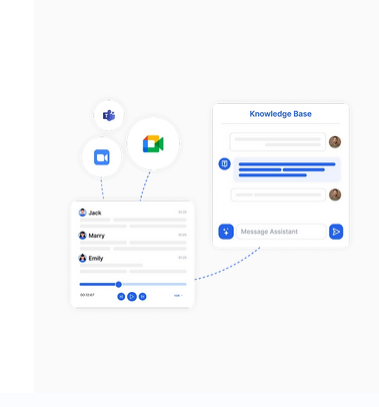
In today’s fast-paced world, businesses generate massive amounts of audio content every day. Meetings, webinars, podcasts, and interviews often contain valuable information that needs to be documented efficiently. Traditional manual transcription can be time-consuming and prone to errors. This is where transcribe audio to text (audio zu text transkribieren) transcription services come into play. By leveraging advanced artificial intelligence, these tools provide fast, accurate, and cost-effective solutions for converting audio into text.
Statistics reveal that companies that adopt AI transcription tools reduce their turnaround time by up to 70%. This improvement not only increases productivity but also ensures that critical information is accessible and organized for decision-making.
How Accurate Is AI Transcription Compared to Manual Transcription?
Accuracy is a major concern when it comes to transcribing important conversations. Modern AI transcription systems are designed to handle various accents, dialects, and background noises. Many AI models now achieve accuracy levels of over 90% for clear audio, which rivals or even surpasses human transcription in certain scenarios.
In addition, AI transcription services offer features such as speaker identification, punctuation correction, and context-aware editing. These features reduce the need for extensive post-editing and ensure that transcripts are not only precise but also readable. For industries like legal, medical, and academic sectors, this level of accuracy is crucial.
What Makes AI Transcription Cost-Effective for Organizations?
Manual transcription often requires specialized personnel and hours of labor. In contrast, AI-powered transcription services can process hours of audio in just a few minutes. This significant reduction in labor costs makes AI transcription an attractive option for organizations of all sizes.
Furthermore, subscription-based or pay-as-you-go models allow companies to scale their transcription needs without major investments in infrastructure. Businesses can transcribe interviews, meetings, and lectures efficiently, freeing up staff to focus on higher-value tasks.
Can AI Transcription Handle Different Languages and Accents?
Globalization has made multilingual communication essential. AI transcription tools are increasingly capable of recognizing multiple languages and regional accents, making them invaluable for international teams. Whether it’s translating a webinar for a global audience or documenting a multilingual conference call, AI transcription systems provide flexibility that traditional methods cannot match.
Advanced AI models are also capable of learning and adapting to specific industry jargon. This ensures that technical terms in fields like medicine, law, and technology are transcribed accurately, reducing misunderstandings and improving overall communication.
Why Is Integration with Other Tools Important for Businesses?
AI transcription services often come with integrations for collaboration platforms, project management tools, and cloud storage solutions. This seamless integration allows teams to access, edit, and share transcripts effortlessly. Companies can link meeting transcripts directly to project management workflows, enhancing transparency and accountability.
Integration also facilitates automated processes such as keyword extraction, sentiment analysis, and content summarization. These features turn raw audio into actionable insights, supporting smarter business decisions and better knowledge management.
How Does AI Transcription Improve Accessibility and Compliance?
Beyond productivity, AI transcription contributes to accessibility. Providing transcripts for audio and video content ensures that people with hearing impairments can access critical information. Moreover, accurate transcripts are essential for regulatory compliance in industries such as healthcare, finance, and education. Maintaining written records of verbal communication helps organizations meet legal and operational standards efficiently.
Conclusion: Is AI Transcription the Future of Documentation?
The adoption of AI-powered transcription services is transforming how organizations handle audio content. With higher accuracy, faster turnaround, multilingual support, and integration capabilities, AI transcription is more than a convenience—it’s a strategic advantage. Companies that implement these tools benefit from streamlined workflows, reduced costs, and improved information accessibility. As AI technology continues to evolve, professional transcription services are poised to become an indispensable part of modern business operations.